

Sunglasses are useful, but some of them cannot be used for night driving, depending on their color.
Now, we are sure that you are curious about what makes some colors suitable for night driving while others are not, and how it is determined whether a color is considered okay or not.
In this article, we will introduce the reasons why tinted lenses are not suitable for night driving, and the comparison of visibility depending on the difference of density.
【Table of Contents】
- Whether Night Driving is Allowed is Determined not by “Color Density” but by “Luminous Transmittance!”
- What Colors Are Allowed for Night Driving, and Which Ones Are Not?
- Comparison of Visibility between Lenses Suitable for Night Driving and Lenses That Are Not
3.1 How the Road Sign Appears
3.2 How the White Line Appears - Conclusion
1. Whether Night Driving is Allowed is Determined not by “Color Density” but by “Luminous Transmittance!”
Regarding the use of tinted lenses for night driving, it is defined as follows in the ISO standards.
Sunglass filters with luminous transmittance of less than 75% shall not be used for road use and driving in twilight or at night.
※Standards may differ per country. Please ask your local distributor for more details.
Let us explain one by one!
First, “luminous transmittance” is a value that represents how bright something appears to the human eye.
To exaggerate a bit, luminous transmittance of 0% means that the human eye does not perceive any brightness at all.
What is often confused here is the “lens density.”
Density represents how dark the lens is tinted (color intensity). However, what determines whether the lens can be used when driving at night is not density, but luminous transmittance.🕶
Generally, the density is often shown on product pages for tinted lenses, but the actual “luminous transmittance” is not always provided.
The higher the density, the less light the lens allows to pass through. However, even with the same density of 25%, how much light passes through, which is luminous transmittance, differs depending on the color tone (such as gray, brown etc.).
Therefore, whether the lens is suitable for night driving cannot be judged by density alone.
When choosing the colors for night driving, it is important to check whether they are labeled “luminous transmittance 75% or higher” or “suitable for night driving.” 🦺
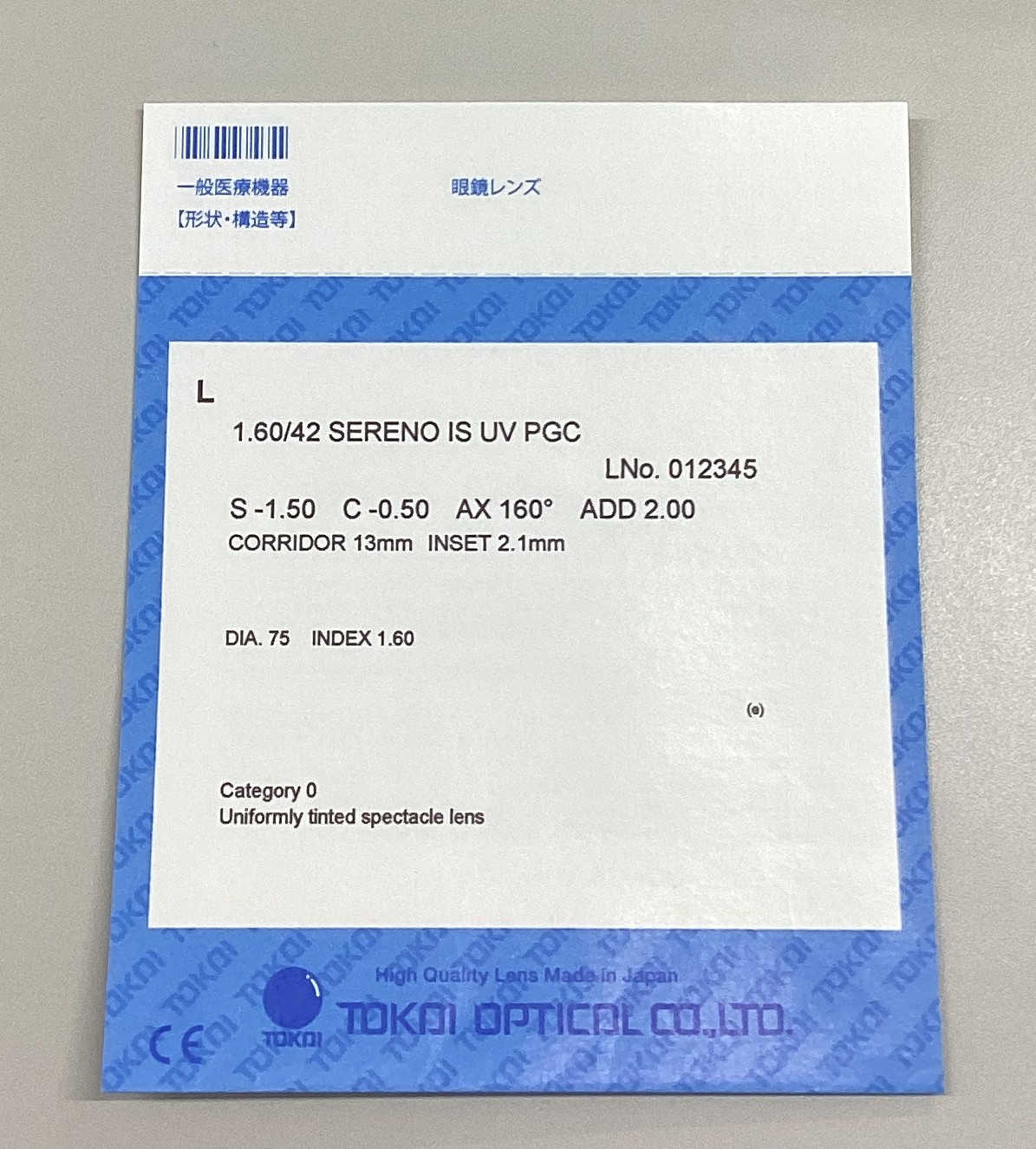
For example, the lenses mentioned later in this article are labeled as shown in the table below.
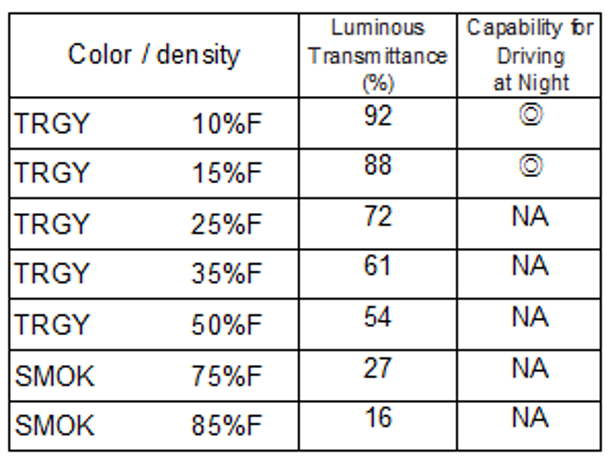
Regarding whether the colors are suitable for night driving, it is better to ask the optician about it.
When you purchase glasses at a general shop, luminous transmittance is indicated on the tag. Therefore, you can judge if you can use them when driving at night or not.
2. What Colors Are Allowed for Night Driving, and Which Ones Are Not?
Let’s take a look at what color is suitable for night driving, and which one is not.
We will use “TRUE GRAY(TRGY)” and “SMOKE(SMOK)” in Arriate Tres as an example.
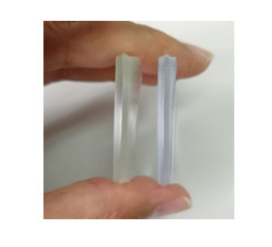
A value of “10%” or “15%” on the lens shown below represents the lens darkness (density).
Lenses suitable for night driving (Luminous transmittance of 75% or higher)
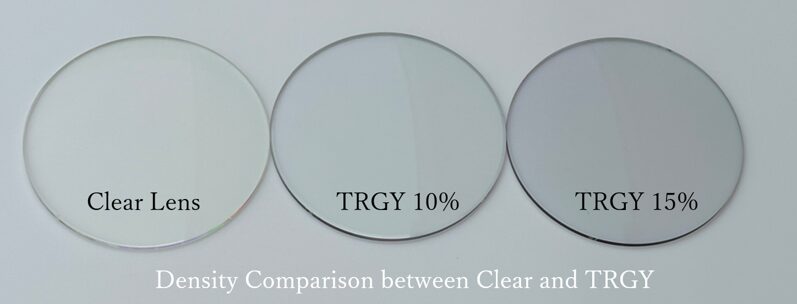
Lenses unsuitable for night driving (Luminous transmittance of less than 75%)
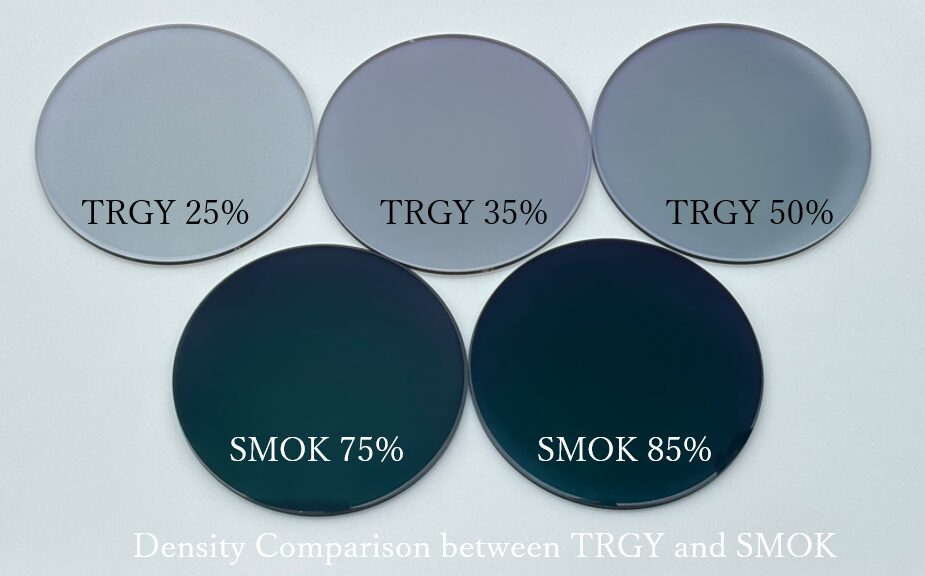
It seems that when luminous transmittance is less than 75%, the color looks distinctly gray.
Using this color during night driving seems dangerous. 🤔
Next, we will explain how visibility differs between colors that are suitable for night driving and those that are not.
※Please note that visibility varies from person to person. The following is the only impression of one individual. 🙇♀️
3. Comparison of Visibility between Lenses Suitable for Night Driving and Lenses That Are Not
We checked the difference in how “road signs” and “white lines” look while driving during the daytime and at night with colors below.
- “TRGY 15%” lens suitable for night driving
- “TRGY 50%” and “SMOK 85%” lens unsuitable for night driving
3.1 How the Road Sign Appears
Clear lens suitable for night driving
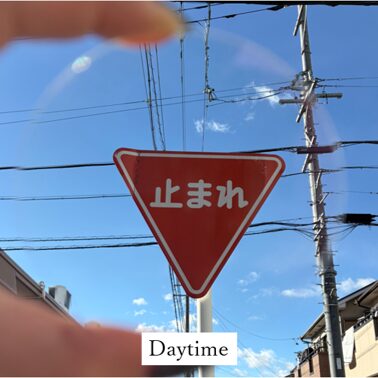
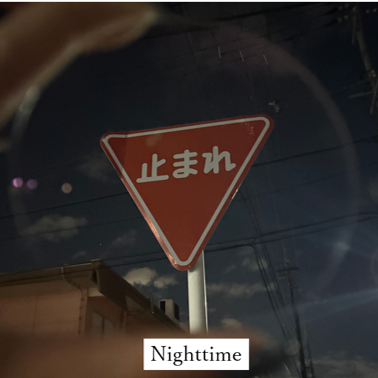
TRGY 15% suitable for night driving
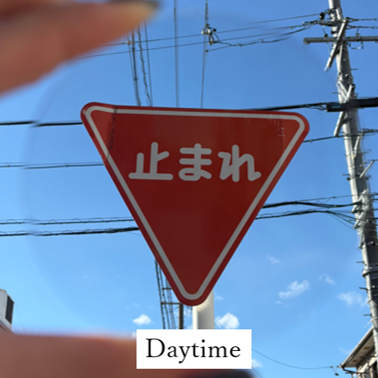
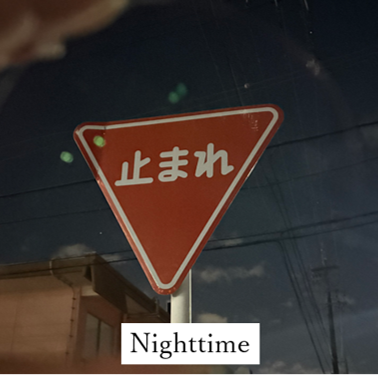
TRGY 50% unsuitable for night driving
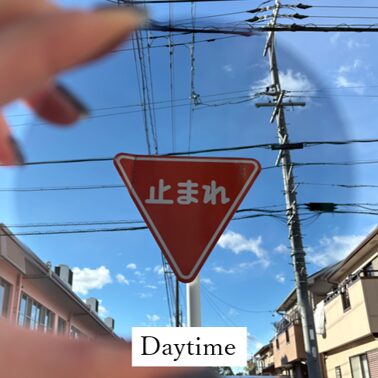
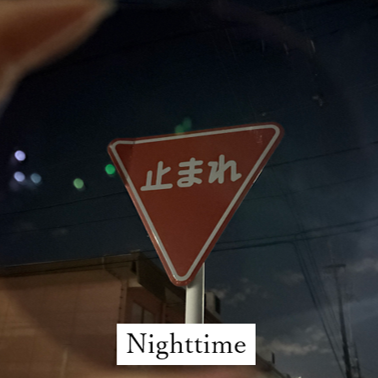
SMOK 85% unsuitable for night driving
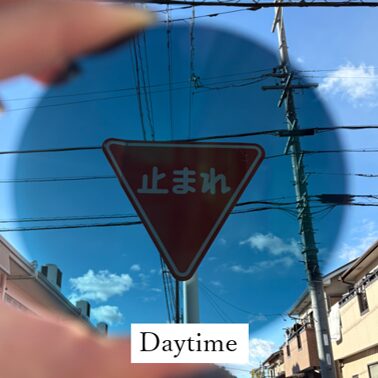
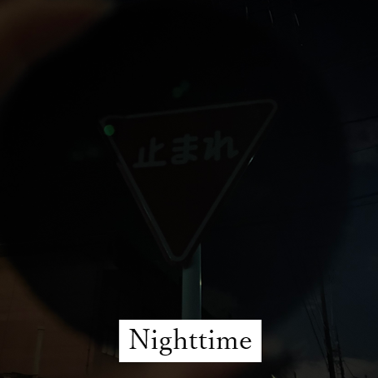
- They could see the road sign clearly in the daytime and at night with both the clear and the TRGY 15% lens.
- The vision through the TRGY 50% lens was darker than the vision through the lens suitable for night driving, both in the daytime and at night. 😣
- When looking through the SMOK 85% lens, the red thing looked almost black during daytime, and they could not see the road signs at all at night. 😥
※How things look differs depending on surrounding environment. Please refer to them as an example.
3.2 How the White Line Appears
Clear lens suitable for night driving
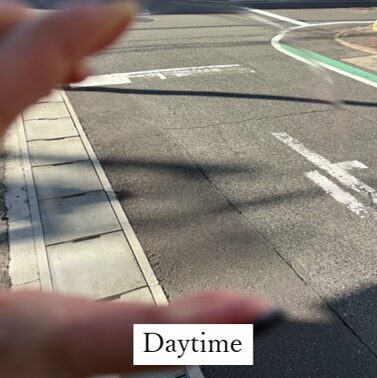
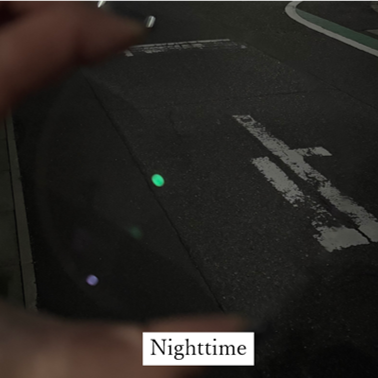
TRGY 15% suitable for night driving
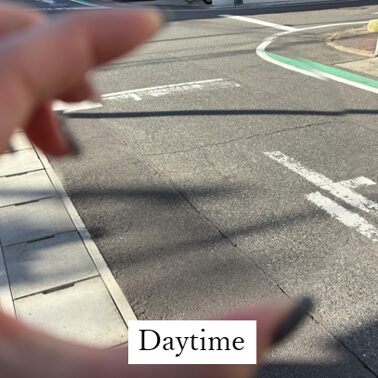
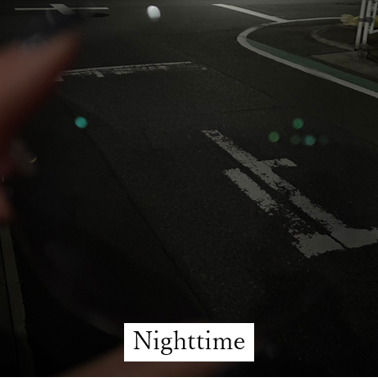
TRGY 50% unsuitable for night driving
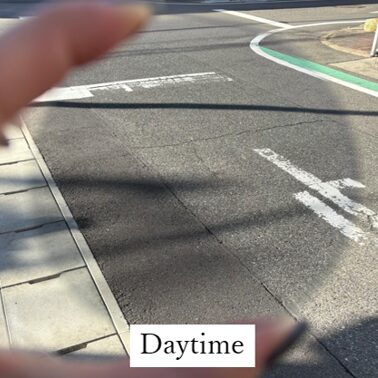
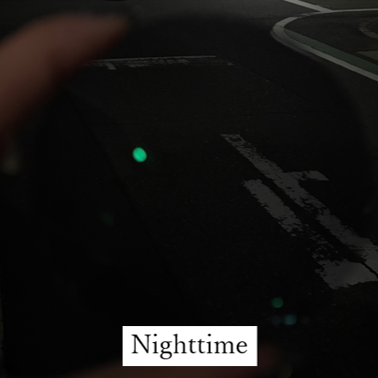
SMOK 85% unsuitable for night driving
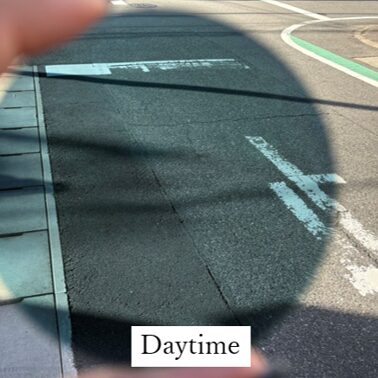
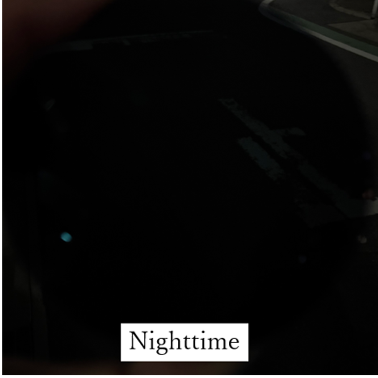
- They could see the white line clearly with all lenses.✨
- Even at night, they could see the white line clearly with clear and the TRGY 15% lens!
- At night, the white line was harder to see with the TRGY 50% and SMOK 85% lens compared to the lens that are suitable for night driving. They felt that visibility decreased as the lens color got darker.
※How things look differs depending on surrounding environment. Please refer to them as an example.
4. Conclusion
In this article, we talked about night driving with tined lenses.
As we mentioned earlier whether the lens is suitable for night driving or not is defined by ISO standards as follows.
Sunglass filters with luminous transmittance of less than 75% shall not be used for road use and driving in twilight or at night.
※Standards may differ per country. Please ask your local distributor for more details.
If your lenses are not suitable for night driving, wear them only during the daytime, and switch to glasses that are suitable for night driving so that you can drive safely.😊
However, please note that if the color density is too dark or if the lens uses special colors that can make traffic light colors harder to distinguish, it may not be used even during the daytime.
 Categories
 Tags
Tags