

When you purchase glasses at an optical shop, you may receive a bag like the one below, which the lenses originally came in.
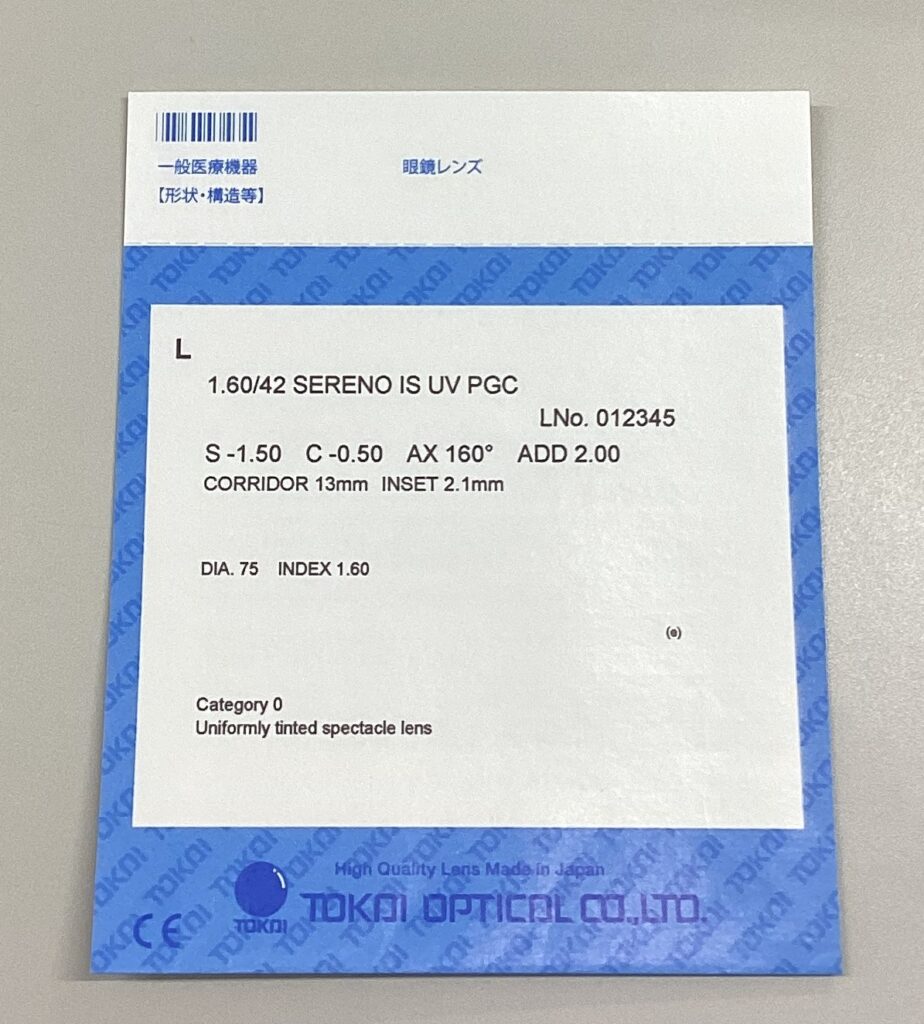
Various pieces of information are written on it in letters or numbers. Have you ever wondered what they mean?
In this article, we will introduce in detail how to read lens information, such as the lens power.
【Table of contents】
- “S (SPH)” Refers to the Spherical Power
1.1 What is “S (SPH)”?
1.2 The Higher the “S (SPH)” Value is, the Stronger the Power Becomes - “C (CYL)” Refers to the Cylindrical Power (Astigmatism Power)
- “AX” Refers to the Astigmatism Axis
3.1 What Is Astigmatism Axis?
3.2 Astigmatism May be Expressed Differently Even When the Power is The Same - “ADD” Refers to Addition Power
- “Corridor Length” is the Length over Which the Lens Power Changes Continuously.
- “Inset” is the Amount of Inward Shift of the Eyes for Near Vision
- Conclusion
1. “S (SPH)” Refers to the Spherical Power
1.1 What Is “S (SPH)”?
The “S” which is written on every bag.
It may also appear as “SPH” on prescription from eye doctor.
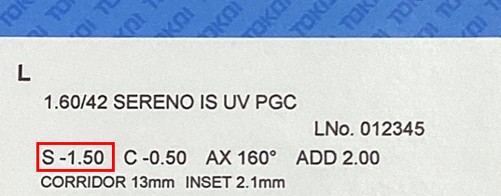
Since “S” is written not only on the lens bag but also on the contact lens box, you may already know the meaning of it.
“S” is an abbreviation of “Sphere” and refers to spherical power.
“A minus (-) is written after “S (SPH)” for myopia, and “a plus (+)” for hyperopia.
When purchasing a reading glass, “+” may be shown even for those who are myopia.
1.2 The Higher the “S (SPH)” Value is, the Stronger the Power Becomes
The higher the S value is, the stronger the lens power becomes.
There is no specific definition, but myopia of S-6.00D or higher and hyperopia of S+4.00D or higher tend to be regarded as high prescriptions.
For reference, the highest-power lens made by TOKAI is S-280D.

The “D” written after the values means “diopter” and refers to unit of lens power.
2. “C (CYL) Refers to the Cylindrical Power (Astigmatism Power)
Some of you have not seen “C” because it is not always written.
“C (CYL)” is an abbreviation of “Cylinder” and refers to cylindrical power (astigmatism power).
“C” is sometimes shown as “CYL” on the prescriptions form eye doctor.
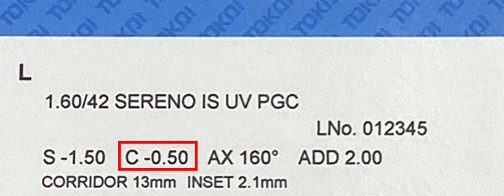
The “C” value represents the “degree of astigmatism.”
Mild astigmatism may not require correction, so “C” sometimes is not listed on the prescription.
Besides “S”, “a minus(-)” or “a plus(+)” are written before the values. In addition, the higher the “C” value is, the stronger the cylindrical power becomes.
It also does not have any definition of high prescription.
According to our shipment volume, C±0.50D is the most frequently shipped, followed by values around C±0.50D to C±1.00D.
C±2.00D tend to be seen as high prescription.
“C” is expressed in the unit “D(diopters)” as well as “S”.
3. “AX” Refers to the Astigmatism Axis
“AX” is an abbreviation of “axis” and refers to astigmatism axis.
Literally, “AX” is written only when astigmatism is present. (“C” and “AX” are always listed together)
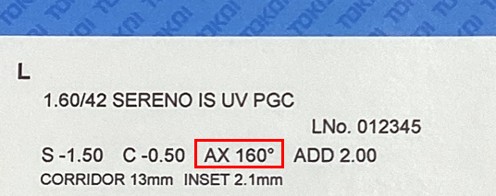
3.1 What Is Astigmatism Axis?
In the case of astigmatism, the cornea and the crystalline lens, which play a role in the eye’s lenses, have an oval shape like a rugby ball.
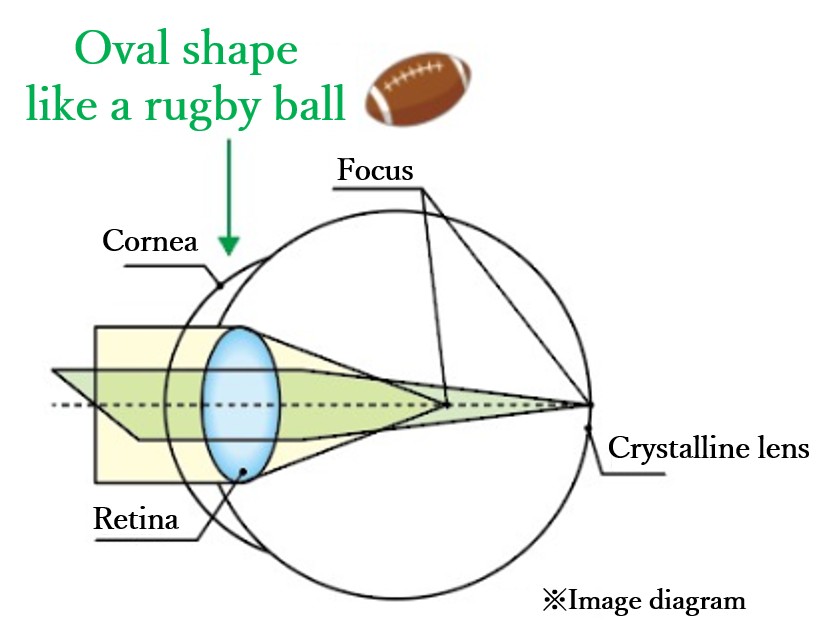
Astigmatism axis refers to the angle that indicates how much the cornea and the crystalline lens are tilted vertically, horizontally, or diagonally.🏈
It is expressed from 0°to 180°.
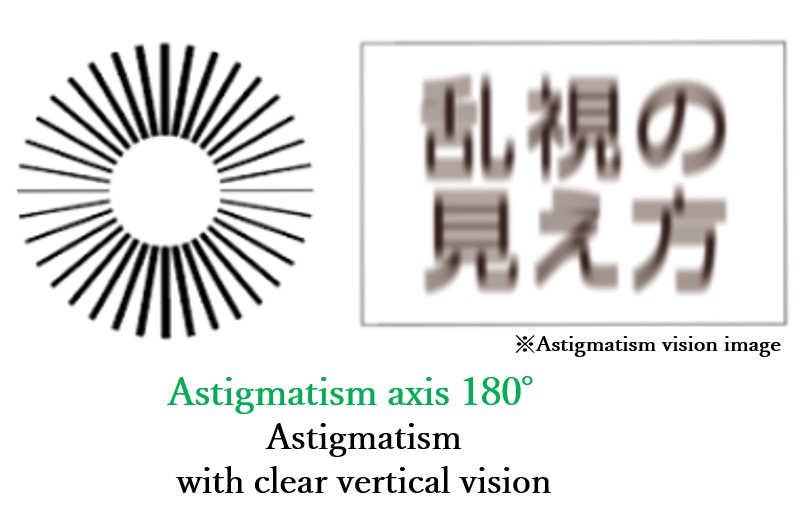
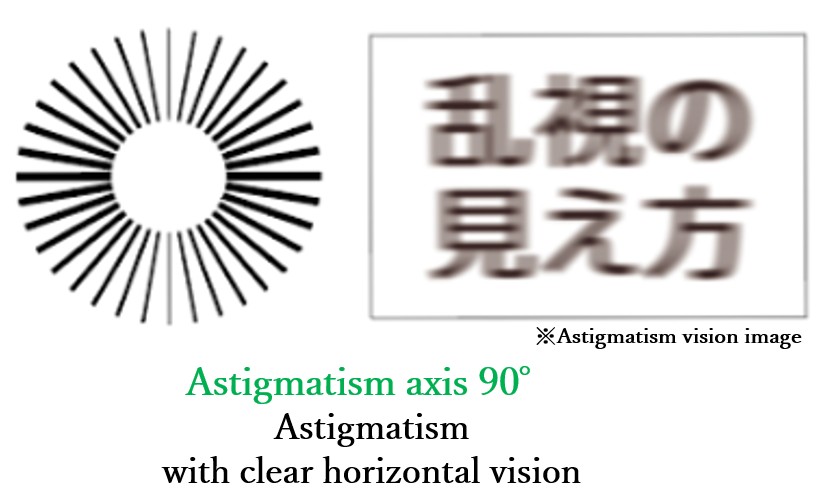
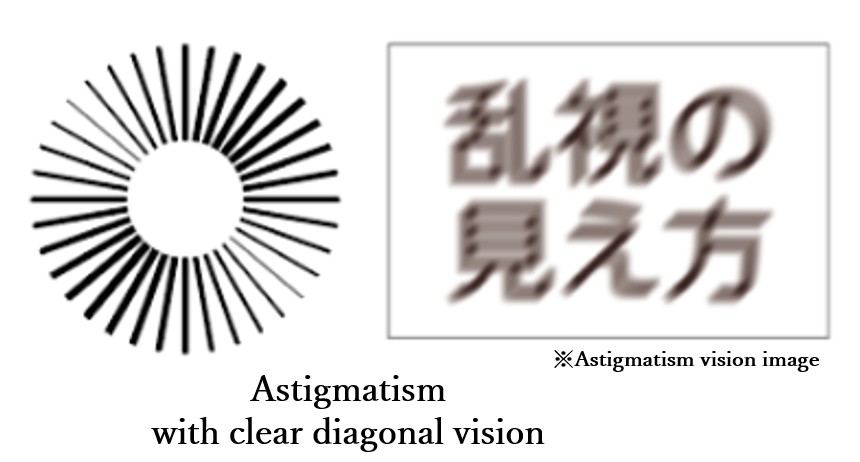
Vision in astigmatism varies depending on the astigmatism axis.
For example, when the astigmatism axis is at 180°, vision is clearer in the vertical direction but blurred in the horizontal direction.
In the case of the astigmatism axis of 90°, vision is clearer in the horizontal direction but blurred in the vertical direction, which is the opposite of when the axis is at 180°.
Furthermore, there is a case where vision is clearer in diagonal direction.
3.2 Astigmatism May be Expressed Differently Even When the Power is the Same
In the case of astigmatism, indications sometimes vary even when the power is the same.
For instance, please look at the two indications below.
These indications are different, but they are the same power.
【S-2.00 C-1.00 AX90°】 【S-3.00 C+1.00 AX180°】
For astigmatism, the values of S and C differ depending on reference astigmatism axis.
Since the prescription can vary based on how astigmatism is measured and, on the equipment, the indications can be changed like above.
If the values on the prescription from eye doctor do not match the ones on the lens bag from the optical shop, it may be helpful to know that there are reasons like this behind the difference.
If you are interested in it, please try calculating the power using the method below. ♪⬇️
① S: S plus C
② C: Change the sign of C (If it is “+”, change it to “-.” If it is “-“, change it to “+.”)
③ AX: AX plus 90 or minus 90 (AX should be from 1°to 180°)
4. “ADD” Refers to addition power
ADD is an abbreviation of “addition” and refers to addition power.
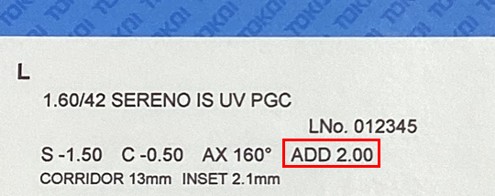
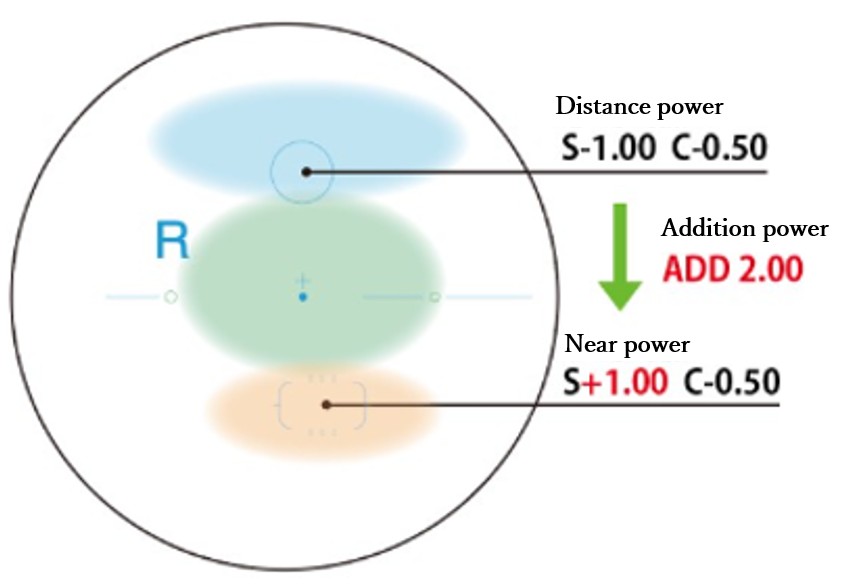
Addition power is the difference between the lens power for seeing far and the lens power for seeing near in bifocal lenses like progressive lenses. ☝️
You can also say that it is the power which requires addition for focusing on near distance.
“ADD” does not have any signs, but it is always “+ (plus).”
Progressive lenses are designed so that the add power changes gradually, focusing on different distances. 👀✨
The values of “S” and “C” written on lens bags represent the power for distance vision, so the power for near vision can be expressed by adding the “ADD” value.
For example, the lens with 【S-1.00 C-0.50 AX180° ADD2.00】would be like this.
Since the power for distance vision is the same, it would be【S-1.00 C-0.50】.
However, in the case of the power for near vision,【ADD2.00】 is added and it would be【S+1.00 C-0.50】.
5. “Corridor Length” is the Length over which the Lens Power Changes continuously.
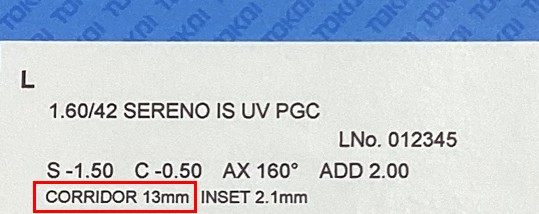
Progressive lenses are designed so that the lens power changes continuously from the distance power to near power. This “length of the area where the power changes continuously” is called “the corridor length.”
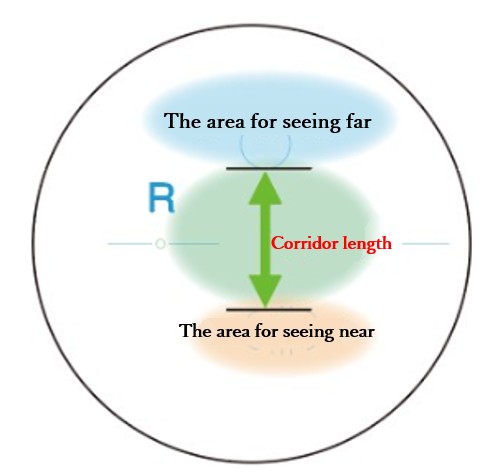
Although it varies by product, our progressive lenses are available in various corridor lengths, such as 9mm and 11-17mm.
6. “Inset” is the Amount of Inward Shift of the Eyes for Near Vision
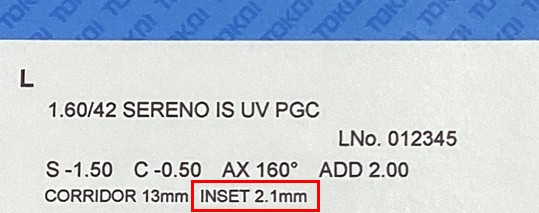
When you see things up close with progressive lens, you use the bottom part of the lens.

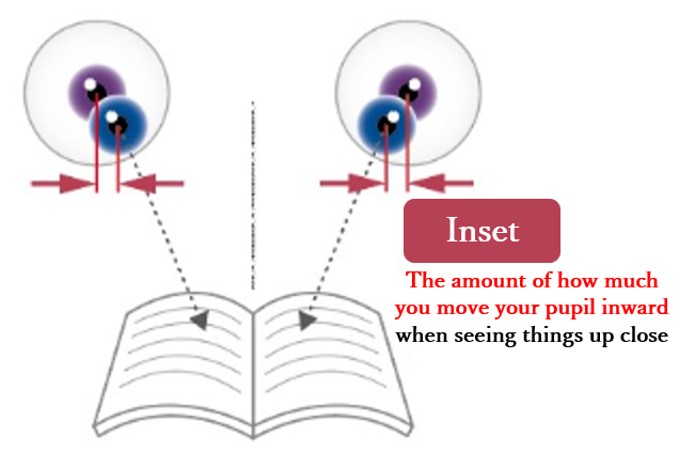
Therefore, your pupil moves inward when you see things nearby compared to when you see things far away.
Inset refers to the amount of how much you move your pupil inward when you see things up close.
For instance, in the case of “inset 2.1mm,” the center of the area for seeing near is designed to be positioned 2.1mm inward from the center of the area for seeing distance.
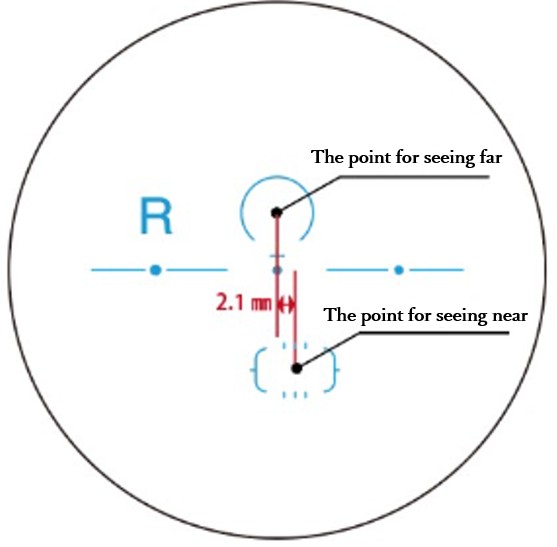
In this way, progressive lenses are designed to make near vision clearer by considering each individual’s specific inset amount.☺️
7. Conclusion
How was it?
Eyeglass lenses look the same, but they are made to match each person’s eye condition, including the lens power, materials, and design.
The lens bag shows the details of the “custom-made” eyeglasses that have been tailored to your eyes.
Knowing the details of your lenses can help you to understand the condition of your eyes.😌
Please look at the lens information on the lens bag or on contact lens box!
You may discover something new!☺️✨
 Categories
 Tags
Tags