

People after undergoing cataract surgery fairly often face a new problem: glare (susceptibility to light) even though they have recovered their acuity.
So now, to all people who are troubled by glare and have feelings such as, “I’ve become more sensitive to light than I was before”, “I’m scared of driving at night”, and “Even indoor light is intense to me”, we will give you some tips for selecting optimal sunglasses (Absorption Lens) to help you live a more comfortable visual life.
The Causes of Cataract and Glare after Cataract Surgery
What is Cataract?
Cataract is a disorder that declines eyesight because of clouding of crystalline lens, and as you get older, the risk of developing cataract increases.
It is said that most people over the age of 70s get cataracts. “Age-related cataracts (senile cataracts)” due to aging is the most common cause, but there are several such as eye injuries, disorder like diabetes, exposure to ultraviolet rays or radiation, and the use of steroids.


Why Do We Feel Glare after Cataract Surgery?
Some people think “I feel stronger glare than I did before” even though the eyesight has recovered.
This is because the cloudy crystalline lens, which previously blocked light transmission, has been replaced with a clear intraocular lens due to cataract surgery and it has allowed a large amount of light to pass through.
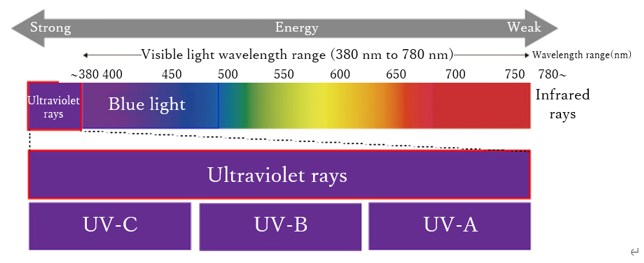
Moreover, short-wavelength light, which was absorbed by the cloudiness of crystalline lens before cataract surgery, is transmitted by the intraocular lens. As a result, our perception of glare and color changes.
Therefore, you feel intense glare from sunlight, lights emitted from indoor LEDs or digital devices, and headlights of oncoming vehicles at night compared to how you perceive the light before the surgery.
In other words, it can be said that “after the surgery, a crystalline lens without cloudiness allows the light, which used to be blocked by the cloudiness of the lens, to pass through. Consequently, patients after the surgery become more sensitive to glare”.
Tips for Selecting Sunglasses for Every Situation
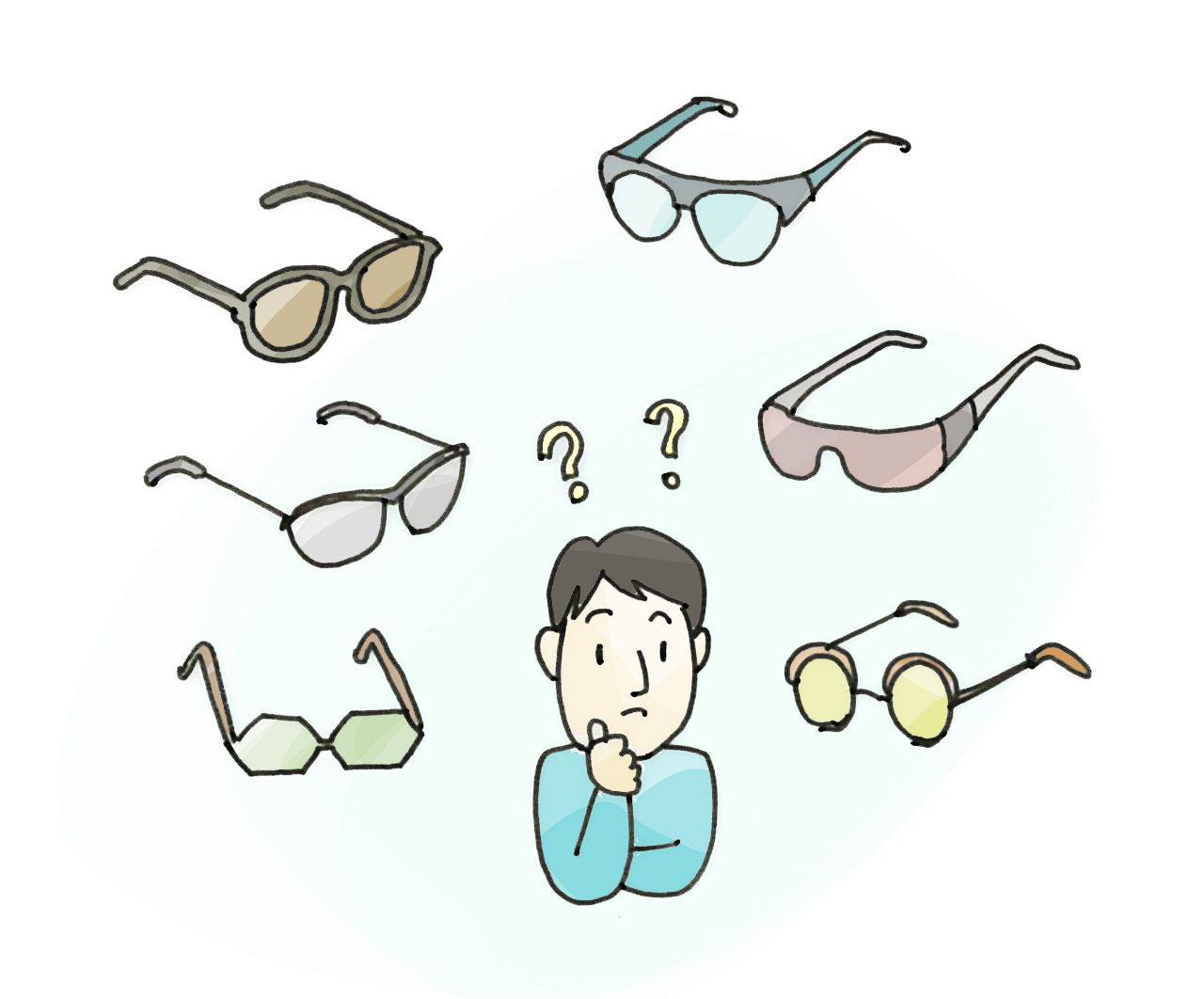
The amount and intensity of lights, and features of wavelengths vary greatly depending on the environment, so it is difficult to adapt a single pair of sunglasses to every situation.
For example, a colored lens suitable for daytime use is not appropriate for indoors or after sunset because the field of vision becomes too dark. In addition, a colored lens suitable for night driving cannot block enough glare in the daytime.
Therefore, using various kinds of sunglasses depending on each environment such as indoors, outdoors, and night driving is the perfect choice for your eyes. However, it takes time and effort to change various sunglasses.
So, we recommend you wear two different types of sunglasses, one for daytime use and the other for indoors and night driving. By doing this, you can adapt to multiple environments and ensure comfortable field of vision.
Measures for Glare after Cataract Surgery
Store-Bought Sunglasses and Important Points
Generally, many people choose sunglasses as a measure to reduce outdoor glare, but it is not widely known that there is an alternative option “Absorption Lens”. You have to be careful about the following when selecting sunglasses over the counter.
When you wear sunglasses with dark color, a pupil dilates and may take in a lot of harmful lights if their ability to block ultraviolet rays is insufficient. Therefore, you must choose lenses with a high UV blocking rate.
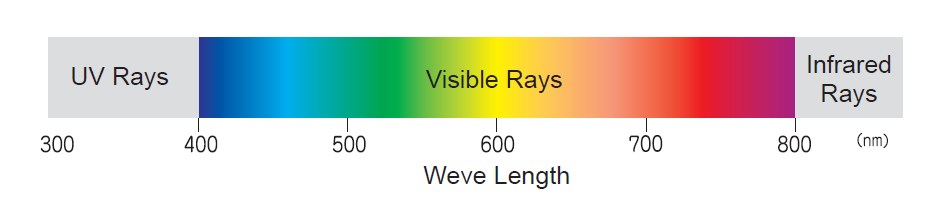
Also, when you feel glare despite wearing dark-colored sunglasses, short-wavelength light (around 380~500nm) may be transmitted through the lenses. This short-wavelength light is called blue light. You need to be careful because that is a cause of glare and has a strong energy that reaches to retina.
Therefore, when you select sunglasses as a measure against glare after cataract surgery, we recommend “Absorption Glasses (Absorption Lens)” that blocks not only ultraviolet rays, but also short-wavelength light for you.
Ideal Glasses After Cataract Surgery “Absorption Glasses”
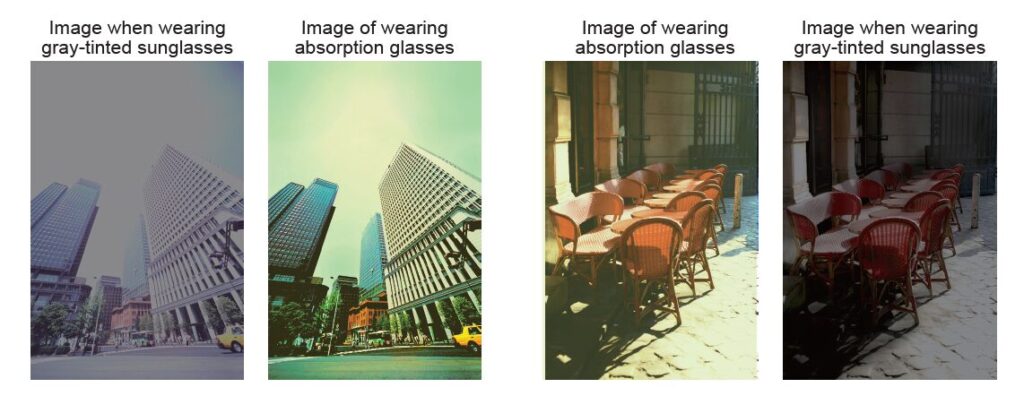
Absorption glasses are different from general sunglasses. They block 100% of ultraviolet rays and reduce blue light that causes glare effectively. Moreover, absorption lens enhances contrast and offers you a clear vision by gradually taking in other types of lights.
That means a main feature of absorption glasses is that they offer comfortable vision while blocking glare and enhancing contrast without darkening the field of view overly.
Difference between Absorption Lens “CCP” and “CCP400”
- CCP
“CCP” series are appropriate for people who feel glare and use them outdoor because of blue light as they are equipped with the function to block blue light perfectly. However, you cannot wear them while driving in the daytime because you may misidentify the signal color due to the feature of blocking blue light fully. - CCP400
On the other hand, “CCP400” series do not block blue light perfectly like “CCP” series. However, they are natural-colored lenses, so they are easy to wear and good for people who are troubled by glare after cataract surgery. The blue light blocking rate of “CCP400” is correspond to the lens darkness except for some yellow colors. That is why we recommend you choose dark colors under strong glare environments. Please do not worry, you won’t feel them as dark as they look.
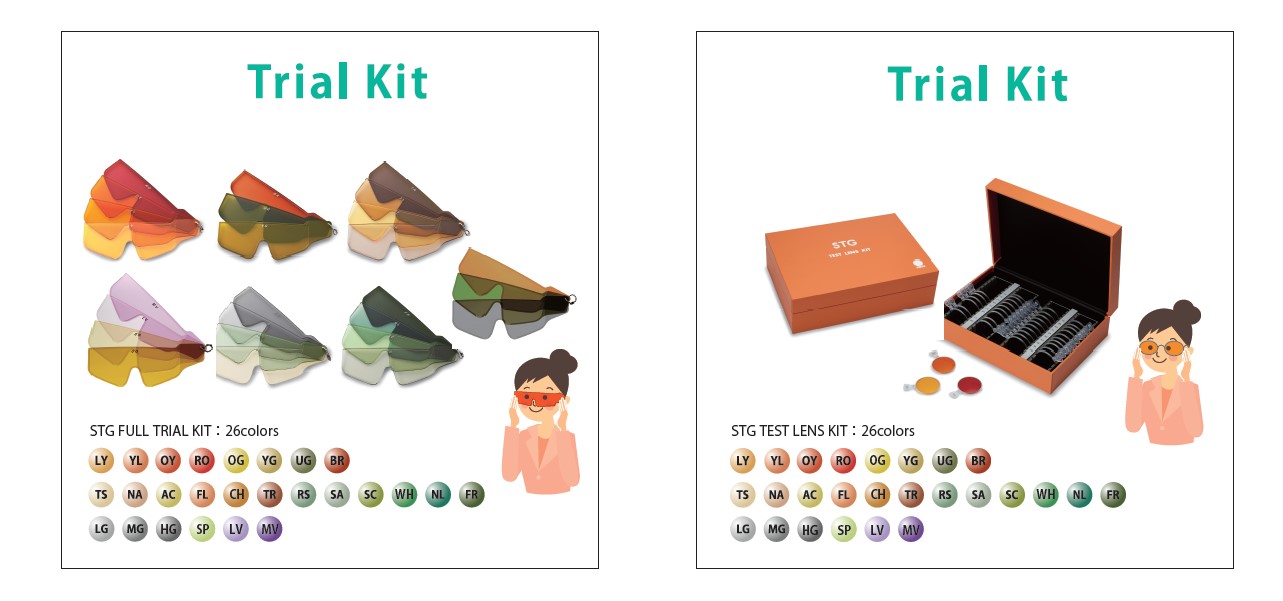
When you select the color of absorption glasses, please try the trial kit (color sample) and choose one with which you can see comfortably, not just based only on how it looks.
*Reference: Vol.12 Questions and inquiries about Absorptive Lens
How to Select Absorption Glasses after Cataract Surgery
When Implantable Collamer Lens Is Prescribed for Distant Vision
We recommend “overglasses” with non-prescription absorption lenses for people who adjust implantable collamer lens for distant vision after cataract surgery. Overglasses are the sunglasses which you wear over the glasses originally, but you can wear them without glasses.
They are designed to cover the side of the face so that they can block harmful lights from every direction and you can ensure clear and comfortable field of vision.
Especially, delicate eyes after cataract surgery are sensitive to light from the peripheral areas. Overglasses offer you more comfortable vision by blocking light entering from the sides and reflecting off the ground that cannot be cut by regular sunglasses.
Absorption overglasses are optimal for people who want to ensure comfortable vision without caring about outdoor glare and you can see comfortably.
When Implantable Collamer Lens Is Prescribed for Near Vision
For people who adjust implantable collamer lens to see at hand clearly after cataract surgery, we suggest prescription absorption glasses with which you can see far outside. In this case, it is recommended that you use absorption lenses fitting into the frame you choose.
Please go to glasses shop and choose a frame that fits your face and absorption lenses to reduce outdoor glare.
Or, you have another choice to wear absorption overglasses over the non-colored prescription glasses for distant vision which you currently use.
Either way, you can protect delicate eyes after cataract surgery and ensure comfortable vision. Please select the best way for your lifestyle and preferences.
Selecting Color of Absorption Glasses
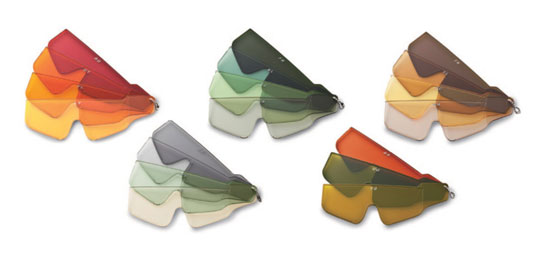
There is a wide variety of color tones of absorption lenses such as yellow, brown, green, gray, and violet and each of them has different shades. When you select color, let’s start by trying lenses with intermediate density (approximately 50% of visible light transmittance rate) in each color and find the most comfortable “color tone” for your eyes.
Once you decide color, you will choose color shade next. Please compare some by trying on whether you feel comfortable with color of intermediate density or one shade darker is better.
For example, in brown color, “CH” is darker than “FL” (intermediate density), and “TR” is one shade darker than “FL”. In green color, “WH” is darker than “NL” (intermediate density), and “FR” is darker than “WH”.
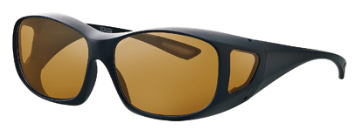
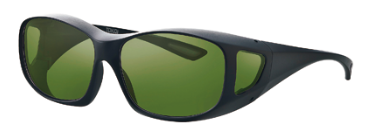
looks bright for the shade and enhances contrast
Absorption overglasses, Viewnal by STG, Type F, Black
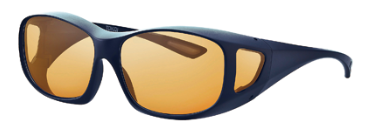
recommends for when playing golf and
emphasizes grass by adjusting the intensity of green tone
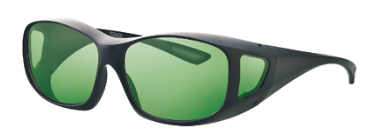
Absorption overglasses, Viewnal by STG, Type F, Black
looks more calm than brown color
Absorption overglasses Viewnal by STG, Type F, Black
looks natural
Absorption overglasses, Viewnal by STG, Type F, Black
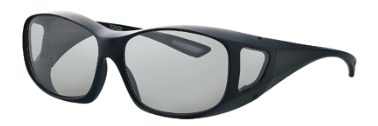
less color tone change and optimal for extended driving
Absorption overglasses, Viewnal by STG, Type F, Black
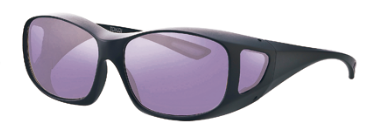
more appealing for women and looks stylish
Absorption overglasses, Viewnal by STG, Type F, Black
*Reference: Medical_Filter_Lens_List.pdf
Summary
We explained how to select absorption glasses for outdoors above. We suggest that you try various colors with the trial kit and find the most comfortable one for your eyes. It is important to decide lens color and color shade by seeing them with your own eyes.
Outdoor use includes not only on sunny days but also cloudy days. So, we recommend you try different colors under various weather conditions to help you choose.
Lastly, if you have any concerns about glare after cataract surgery, please consult your doctor first. At that time, it may be helpful to ask about the effects of absorption glasses (absorption lenses).
 Categories
 Tags
Tags